
Access Control System Malaysia: Complete Guide to Choosing the Right System
Looking for an access control system in Malaysia? Learn how card, biometric, facial recognition and turnstile systems work, where they are used, and how to choose the right solution for your business.
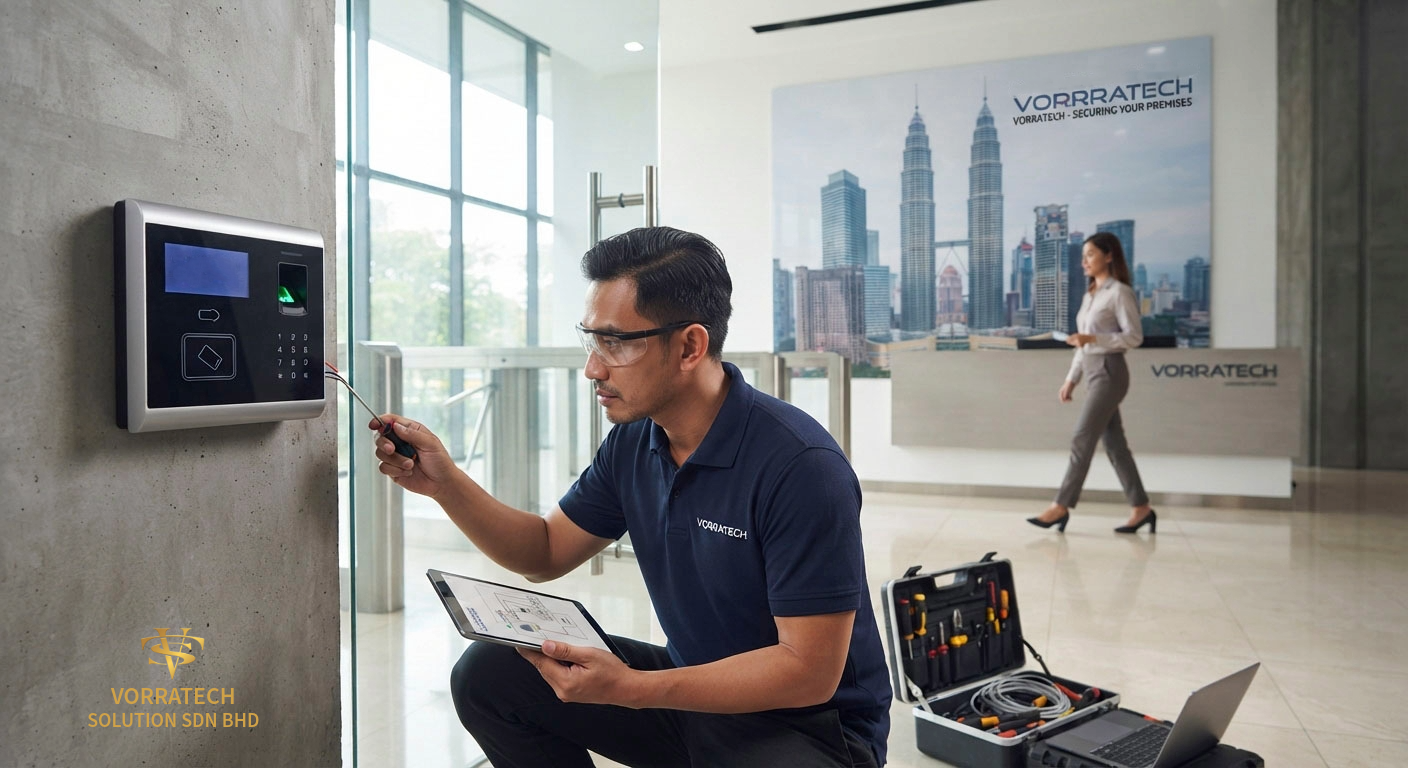
Managing who can enter your premises is an important part of modern security. Traditional keys can be lost, duplicated or difficult to manage when employees change. An access control system provides a more structured way to control entry, manage user permissions and keep records of access activity.
From factories and warehouses to offices, schools and commercial buildings, access control systems in Malaysia are increasingly used to protect people, equipment, confidential information and restricted areas. The right system can also be integrated with CCTV, turnstiles and other security solutions to create a more complete security environment.
What Is an Access Control System?
An access control system is an electronic security solution that determines who is allowed to enter a particular door, room or restricted area. Instead of relying only on a physical key, users authenticate themselves using a card, PIN, fingerprint, facial recognition or another credential.
When a user presents a valid credential, the access controller verifies the permission and activates the door lock or access point. The system can also record access events, allowing authorised personnel to review when users entered or exited a particular area.
How Does an Access Control System Work?
A typical door access control system consists of an access reader, controller, electronic door lock, exit button and management software. Depending on the system, additional components such as biometric readers, door sensors and networking equipment may also be included.
- User presents a card, fingerprint, PIN or face to the reader.
- The reader identifies the user's credential.
- The access controller checks whether the user has permission to enter.
- If authorised, the electronic lock releases the door.
- The access event can be recorded in the management system.
- Security personnel can manage users and access permissions when required.
This process allows businesses to control access based on users, locations, schedules and security requirements instead of giving everyone the same physical key.
Types of Access Control Systems
Different businesses have different security requirements. The most suitable access control system depends on the number of users, security level, environment, budget and whether the system needs to integrate with other security equipment.
1. Card and RFID Access Control
Card-based access control is one of the most common solutions for offices, factories and commercial buildings. Employees use an access card or RFID credential to enter authorised areas.
One major advantage is easier user management. If an employee loses a card or leaves the company, the credential can be disabled without changing the physical door lock.
2. Fingerprint Access Control
Fingerprint access control uses biometric authentication to verify a person's identity. Because the credential is based on the user's fingerprint, there is no physical access card to carry or lose.
Biometric access can be useful for restricted areas where businesses require stronger identity verification, such as server rooms, laboratories, production areas and secure offices.
3. Facial Recognition Access Control
Facial recognition systems identify authorised users using facial biometric technology. These systems can provide convenient, contactless access and may be suitable for workplaces with higher traffic volumes.
When selecting a facial recognition system, businesses should consider environmental conditions, lighting, user volume, privacy requirements and the accuracy of the solution.
4. PIN or Password Access Control
PIN-based access control allows users to enter a predefined code to gain access. It can be suitable for smaller offices, storage areas or locations where a simple access method is sufficient.
For higher-security applications, PIN access can be combined with cards or biometric authentication to provide multiple levels of verification.
5. Turnstile Access Control
Turnstiles provide controlled pedestrian entry and are commonly used in factories, offices, commercial buildings, schools and other facilities where organisations need to manage the movement of people.
Turnstiles can be integrated with card readers, biometric authentication and other access control technologies. For environments that require electrostatic discharge protection, specialised ESD turnstile systems can also be used.
Where Are Access Control Systems Used?
Access control systems can be adapted to different environments and security requirements. Common applications in Malaysia include:
- Factories and manufacturing facilities
- Office buildings
- Warehouses and logistics centres
- Schools and educational institutions
- Commercial buildings
- Server rooms and IT facilities
- Laboratories and restricted production areas
- Residential and gated properties
Access Control for Factories
Factories often have multiple access zones with different security requirements. Employees may need access to production areas while visitors, contractors and other personnel may only be permitted in designated areas.
An access control system allows management to assign different access permissions according to departments, working hours and restricted areas. When combined with turnstiles and CCTV, the system can provide better visibility over personnel movement.
Access Control for Offices
For offices, access control can replace traditional keys and provide more flexible employee access management. Different permissions can be assigned to employees, management, visitors and contractors.
Businesses can also restrict access to areas such as meeting rooms, server rooms, document storage areas and executive offices.
Access Control for Schools
Schools can use access control to manage entry into staff-only areas, administrative offices, laboratories, equipment rooms and other restricted locations.
The system can also be combined with CCTV to provide additional visibility around important access points.
Access Control and CCTV Integration
Access control and CCTV serve different but complementary purposes. Access control helps determine who is authorised to enter, while CCTV provides visual information about what happened at the location.
For example, if an unauthorised access attempt occurs, CCTV footage can help security personnel investigate the event. Integrating both systems can provide a more complete view of security activity.
Access Control and Turnstile Integration
For facilities with high pedestrian traffic, access control can be integrated with turnstiles to create a controlled entrance. Employees can authenticate using cards or biometric credentials before the turnstile allows passage.
This approach is particularly useful for factories, offices and commercial facilities where organisations need to control employee and visitor movement through designated entrances.
Benefits of Installing an Access Control System
- Better control over who can enter restricted areas
- Easier management of employee access permissions
- Ability to disable lost or unused credentials
- Access records for security monitoring and review
- Flexible access schedules for different users
- Reduced dependence on traditional physical keys
- Integration with CCTV, turnstiles and other security systems
- Scalable solutions for businesses with multiple doors or locations
Access Control System vs Traditional Keys
Traditional keys may be suitable for simple applications, but managing a large number of physical keys can become difficult as an organisation grows. Access control provides more flexibility because permissions can be managed electronically.
- Lost key: Physical key may need to be replaced; electronic credential can be disabled.
- Employee leaves: Access rights can be removed without replacing the door lock.
- Restricted access: Different users can receive different permissions.
- Access records: Electronic systems can record access events.
- Multiple locations: Users can be managed across multiple access points depending on the system.
How to Choose the Right Access Control System in Malaysia
Choosing an access control system should start with your actual security requirements rather than simply selecting the cheapest reader or controller. Consider the following factors before purchasing.
- Number of doors and access points
- Number of employees and users
- Required security level
- Card, fingerprint, facial or PIN authentication
- Indoor or outdoor installation environment
- Access schedules and permission levels
- Requirement for access records and reporting
- Integration with CCTV or turnstiles
- Future expansion requirements
- Installation, maintenance and technical support
How Much Does an Access Control System Cost in Malaysia?
The cost of an access control system in Malaysia varies depending on the size and requirements of the installation. A single-door office system will have very different requirements from a multi-door factory or commercial building.
Factors that can affect the overall project cost include the number of doors, reader technology, biometric requirements, access controllers, electronic locks, software, networking, cabling, installation and integration with CCTV or turnstiles.
For larger projects, a site assessment is recommended so the system can be designed according to the building layout, security requirements and future expansion plans.
Why Work with an Experienced Access Control Supplier?
An access control system is more than simply installing a card reader next to a door. The reader, controller, lock, software, network and other security systems need to work together reliably.
An experienced security system supplier can assess the site, identify suitable access points, recommend the appropriate authentication method and design a solution that can be expanded as your organisation grows.
Conclusion
An access control system provides businesses with a more flexible and manageable way to control entry into their premises. Whether you operate a factory, office, warehouse, school or commercial building, the right solution can help improve security while making access management easier.
From card and biometric readers to facial recognition and turnstiles, the best solution depends on your site's requirements, security level and future plans. Integrating access control with CCTV and other security technologies can further strengthen your overall security infrastructure.
Looking for an access control system supplier in Malaysia? VorraTech can help you evaluate your requirements and recommend a suitable security solution for your facility. Contact us to discuss your project or request a quotation.
Looking for an ESD Turnstile System in Malaysia?
VorraTech Solution provides ESD turnstile and security-system solutions for electronics manufacturing, industrial and controlled environments.